A rotating LED display synchronizes screen movement with digital content to create dynamic visual effects. Understanding how motion control, content playback, and display specifications work together helps buyers assess synchronization performance and choose the right solution.
How Does Motion Control Work with Content Playback?
Motion Control Defines the Rotation Sequence
The motion control system governs how the display rotates. PTCLED offers customizable rotation settings to suit different display requirements.
The rotation configuration determines how the screen faces move through the viewing area and contribute to the intended visual effect.
Content Mapping Matches the Screen Structure
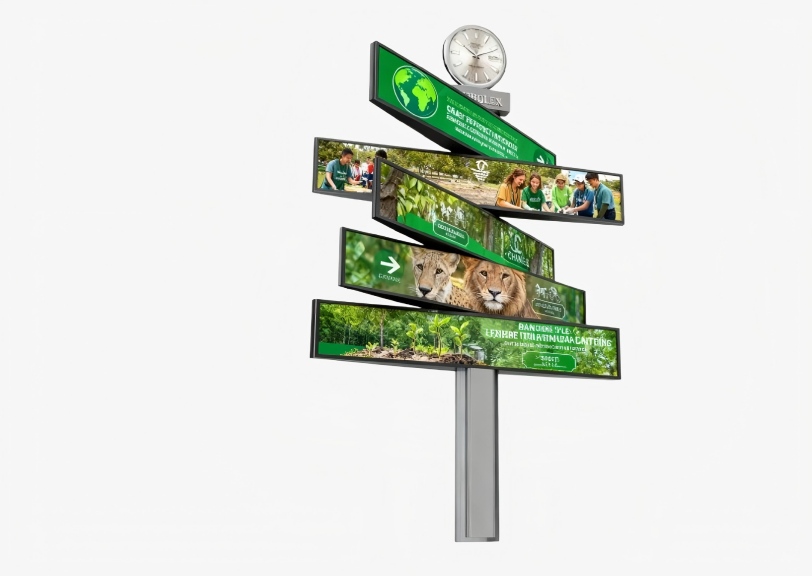
Content must be arranged according to the physical structure of the rotating display. A multi sided screen may present different sections of a visual sequence as its faces rotate into view.
Planning content around the number of display faces, viewing angles, and rotation pattern helps keep messages clear and visually consistent.
Playback Coordination Maintains Visual Consistency
Synchronization connects the rotation sequence with content presentation to create the intended visual effect. PTCLED's rotating LED display systems combine multi sided LED screens with an electromechanical rotation system and support synchronized content presentation.
その RS series rotating LED display provides one example. Its triangular prism structure has three display faces, with customizable rotation and content settings. For projects requiring precise position based triggering or defined timing tolerances, buyers should confirm the available functions with the supplier.

Which Display Specifications Affect Visual Performance?
Refresh Rate Influences Image Presentation
The RS and RW product pages list refresh rates ranging from 3840 Hz to 7680 Hz, depending on the configuration. Refresh rate affects image presentation, and buyers can evaluate visual performance under their intended viewing and recording conditions.
However, refresh rate alone does not establish whether mechanical movement and content playback are synchronized. Buyers should assess visual specifications separately from motion control capabilities.
Pixel Pitch Determines Image Detail
The RS series offers indoor P2.5, P3, and P4 options, alongside outdoor P5, P6.67, and P8 configurations. The RW series offers indoor P3 and P4 options, alongside outdoor P5 and P6.6 configurations.
Pixel pitch affects image detail at a given viewing distance. A smaller pixel pitch may suit closer viewing, while larger pitches may be appropriate for audiences farther from the screen.
The final selection should account for screen dimensions, content complexity, audience distance, and installation conditions.
Brightness Matches the Installation Environment
Brightness requirements vary between indoor and outdoor installations. The RS product page lists indoor brightness of at least 600 nits and outdoor brightness of 4500 to 6000 nits for the configurations shown.
Buyers should confirm the brightness of the exact model before ordering. Adequate brightness improves visibility under ambient lighting, but it does not independently determine synchronization performance.
How Can Buyers Verify Synchronization Performance?
Define the Required Movement and Content
Before ordering, document the intended rotation behavior, content sequence, viewing positions, and operating conditions. If the project requires programmed pauses or different content on individual faces, include these requirements in the technical specification.
Clear requirements help the supplier determine whether the proposed control system supports the intended display behavior.
Test the Display Under Operating Conditions
Ask the supplier to demonstrate the proposed configuration using the intended content and rotation settings. Check whether each face presents the expected visual information and whether transitions remain consistent during movement.
Testing under expected operating conditions helps buyers evaluate the display beyond a standard demonstration. Where possible, review representative content and confirm that the visual effect meets the project's requirements.
Confirm Specialized Timing Requirements
Projects requiring specific synchronization tolerances, position accuracy, or coordination across multiple displays need additional technical confirmation. Buyers should request written details about supported functions and relevant test evidence before production.
Do not assume that a particular encoder, closed loop control system, or communication protocol is included unless the supplier confirms it. Defining the required operating conditions and acceptable timing deviations in advance helps prevent mismatched expectations.
How Should You Choose a Suitable Rotating LED Display?
Screen Structure Determines the Viewing Experience
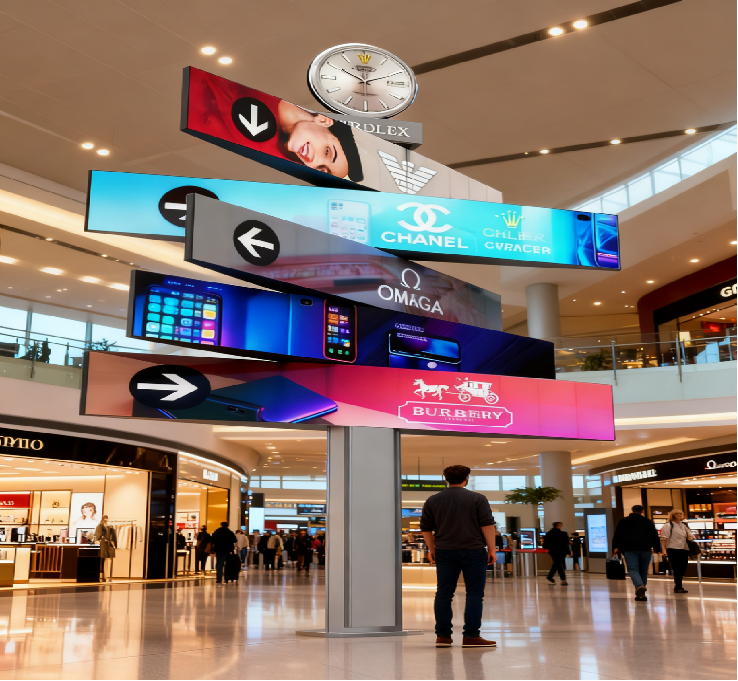
The RS series uses three sided sub screens, while the RW series uses five double sided sub screens. These structures create different viewing arrangements and affect how audiences encounter the displayed content.
その RW series rotating LED display is an option to evaluate when a project requires a multi sided screen structure. Consider audience positions, available space, screen dimensions, and the intended viewing experience before selecting a model.
Installation Conditions Shape Model Selection
Review the display's dimensions, weight, mounting arrangements, power requirements, and clearance around the rotation path. The installation environment also affects brightness and environmental protection requirements, particularly for outdoor projects.
Confirming these conditions early helps ensure that the selected display fits the site and can operate as intended. Buyers should verify model specific specifications and customization options with the supplier before finalizing the design.
結論
Reliable rotating LED display performance depends on coordinated motion control, well planned content, and specifications suited to the installation. Explore suitable options for your project and contact PTCLED's team あなたの要件について話し合う。




