In the commercial display industry, an LED screen’s performance is traditionally judged by its electronic specifications: pixel pitch, refresh rate, grayscale depth, and maximum brightness. However, the physical environment where a display is deployed does not interact with the silicon inside; it interacts with the screen's exterior surface. This makes the LED screen surface treatment one of the most critical factors determining a display's real-world lifespan, durability, and optical quality.
Whether dealing with moisture in outdoor billboards, physical contact in retail spaces, or harsh reflections in broadcast studios, surface treatments serve as the final barrier of defense and refinement. This comprehensive guide explores the engineering principles, core technologies, and primary applications of modern LED screen surface treatments, helping you select the optimal solution for your next display project.
What Is LED Screen Surface Treatment?
An LED screen surface treatment is an engineered physical or chemical layer applied to the front-facing plane of an LED module. In traditional Surface Mounted Device (SMD) LED displays, individual diodes and their delicate gold-wire solder points are exposed directly to the atmosphere. This exposure makes them highly vulnerable to mechanical impact, moisture ingress, electrostatic discharge (ESD), and oxidation.
Advanced surface treatments solve these issues by applying protective polymers, micro-textured layers, or molecular coatings across the module. These technologies do not merely shield the hardware; they also fundamentally alter how light behaves as it exits the screen and how ambient light is reflected back to the viewer. By transforming individual point-light sources into more uniform, diffused light outputs, surface treatments enhance contrast ratios and minimize visual fatigue for the end-user.

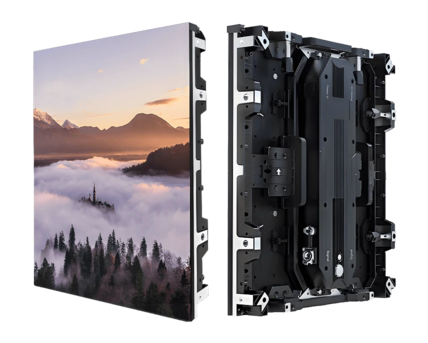
Main 3 Types of LED Screen Surface Treatments
Different environments impose unique stresses on a display. To address these varied challenges, manufacturers have developed several distinct surface treatment methodologies.
1. Nano Coating (Pixel-Level Protection)
Nano coating involves the application of an ultra-thin, microscopic protective film (often just nanometers thick directly over the LED diodes and PCB. This molecular-level treatment utilizes advanced hydrophobic and oleophobic materials to create a surface with a high liquid contact angle. Water and oil-based contaminants simply bead up and roll off.
Because the coating is incredibly thin, it does not trap heat or alter the optical path of the light. It provides exceptional outdoor LED display protection against humidity, rain, and salt-spray corrosion without adding bulk or weight to the display cabinet.
2. GOB (Glue-on-Board) Resin Encapsulation
GOB is a revolutionary packaging technology where a transparent, patented epoxy or polyurethane resin is poured over the entire surface of an assembled SMD module. This gel completely fills the structural gaps between the individual LED lamps and cures into a perfectly flat, seamless, and transparent shield.
This process yields a highly durable, scratch resistant LED screen that is completely waterproof, dustproof, and impact-resistant. GOB prevents individual diodes from being knocked loose during transport, installation, or physical interaction, making it highly popular for rental screens and low-mounted public displays.
3. COB (Chip-on-Board) Screen Surface Treatment
Unlike GOB, which is applied to finished SMD modules, COB screen surface treatment is integrated directly into the semiconductor packaging process. In COB displays, bare LED chips are bonded directly to the PCB substrate and then encapsulated as a whole under an optically clear epoxy resin or silicone layer.
The resulting surface is completely flat, smooth, and exceptionally robust. COB surface treatments are highly refined, eliminating the physical gaps of traditional pixel packaging. This results in superior heat dissipation, a failure rate close to zero, and an ultra-fine pixel pitch that produces stunning, print-like imagery.
4. Anti-Glare (AG) Treatment
In brightly lit indoor environments, screens often suffer from the "mirror effect," where reflections from overhead lighting or windows wash out the image. An anti-glare treatment alters the outer surface of the display module—either through chemical etching or the application of a microscopic matte film.
This micro-textured surface scatters incoming specular ambient light in multiple directions. By converting harsh reflections into soft, diffused light, AG treatments preserve deep black levels and high contrast, making the screen comfortable to view for long periods.
Performance Comparison of Surface Treatments
To help engineers and project managers choose the correct technology, the table below compares the performance characteristics of these common surface treatments against an untreated standard SMD screen.
|
Performance Metric
|
Standard SMD (Untreated)
|
GOB Encapsulation
|
COB Surface Treatment
|
Nano Coating Only
|
|
Physical Impact Resistance
|
Very Low (Diodes easily dislodged)
|
Excellent (High anti-collision rating)
|
Outstanding (Fully integrated shield)
|
Low (Protects chemically, not physically)
|
|
Ingress Protection (Front)
|
IP30 to IP43 (Vulnerable to liquid)
|
IP65 (Fully waterproof/dustproof)
|
IP65 (Impervious to moisture/dust)
|
IP54 to IP65 (Hydrophobic barrier)
|
|
Scratch & Wear Resistance
|
Extremely Low
|
High (Protective resin layer)
|
Excellent (Hardened protective layer)
|
Moderate (Protects against oxidation)
|
|
Optical Clarity & Contrast
|
High baseline clarity; high reflections
|
Softened light output; improved contrast
|
Superior contrast; uniform surface light
|
High baseline clarity; no added refraction
|
|
Thermal Dissipation
|
Direct ambient cooling
|
Good (Conductive resins prevent heat buildup)
|
Outstanding (Direct thermal path to PCB)
|
Unaffected (Ultra-thin layer has no thermal mass)
|
|
Best Application Scenarios
|
Controlled, low-budget indoor venues
|
Retail lobbies, rental events, public transit
|
High-end command centers, boardrooms
|
Outdoor billboards, coastal DOOH installations
|

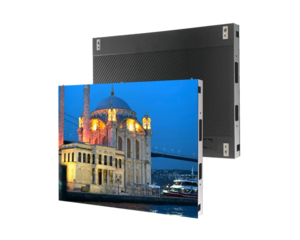
LED Screen Surface Treatment: Technical and Environmental Considerations
When specifying an LED screen surface treatment, engineers must balance multiple physical properties to avoid performance trade-offs.
Thermal Management and Dissipation
LEDs convert a significant portion of their electrical energy into heat. If a surface treatment acts as a thermal insulator, the junction temperature of the diodes will rise, accelerating lumen depreciation and shifting color wavelengths. Advanced treatments, such as PTCLed's specialized GOB and COB polymers, are formulated with high thermal conductivity. These materials help transfer heat away from the diode array to the outer face of the module, where it can be dissipated by convective air currents.
Index of Refraction and Light Transmission
Applying any material over an LED changes the refractive boundary between the semiconductor, the air, and the viewer. If the refractive index ($n$) of the coating does not match the diode's optical properties, internal reflections can occur, causing light loss and color shifting at wide viewing angles. High-grade optical resins are carefully formulated to match the refractive index of the LED dome, maintaining light transmission rates above 98% and expanding viewing angles up to 180° horizontally and vertically.
Typical Application Fields for LED SurfaceTreatment Craft
The selection of LED surfacetreatment processes largely relies on actual applicationfield conditions.
Outdoor DOOH and Coastal Displays
These environments demand robust outdoor LED display protection. Salt, humidity, and acid rain can corrode copper traces in days. A combination of structural silicone sealing and high-grade nano coating ensures long-term survivability without altering the screen’s high-brightness output.
Corporate Boardrooms and Control Rooms
These spaces require ultra-fine pixel pitches and zero reflections. Utilizing COB screen surface treatment with built-in anti-glare treatment ensures that text remains perfectly legible from any seating position, even under direct overhead fluorescent lighting.
Public Transit and Interactive Spaces
Low-mounted displays in subway stations, schools, and interactive retail kiosks are highly vulnerable to vandalism, passenger bumps, and frequent cleaning. Implementing a highly durable, scratch resistant LED screen via GOB resin encapsulation ensures the display can withstand daily physical contact and be wiped down easily without risking pixel damage.
PTCLed: Your Expert Partner for Advanced LED Solutions
As a professional, leading indoor and outdoor LED screen manufacturer, PTCLed is dedicated to delivering industry-grade display technologies that excel in the harshest environments. We offer a comprehensive suite of solutions, including high-definition indoor displays, rugged outdoor screens, and cutting-edge small pitch LED display products.
By integrating state-of-the-art GOB encapsulation, advanced nano coating technologies, and specialized COB screen surface treatment directly into our automated manufacturing pipelines, we ensure every display delivers brilliant color uniformity, exceptional contrast, and unmatched durability. Submit your project parameters on our contact page to receive customized quotations and tailored technical suggestions from our sales engineers. Browse our PTCLed Product Catalog to pick out suitable displays for your upcoming projects.
Frequently Asked Questions (FAQ)
What is the primary benefit of GOB over traditional SMD screens?
The biggest advantage of GOB is superior physical durability. GOB covers SMD modules with transparent protective resin, making panels impact-proof, waterproof, dustproof and anti-static, perfect for rental scenes and crowded public areas prone to pixel damage.
Does an anti-glare treatment reduce the overall brightness of the LED screen?
AG treatment barely cuts screen brightness. It disperses ambient light reflections to lift visual contrast under bright lighting and deliver sharper viewing effects.
Is a scratch resistant LED screen necessary for indoor displays?
Yes, it is strongly advised for publicly accessible indoor screens. Ordinary SMD lamp beads are fragile against scratches and collision; GOB and COB protective coatings effectively guard your display equipment from accidental damage in shops, museums and schools.
Can nano coating protect outdoor screens from extreme weather?
Yes, nano coating safeguards outdoor displays against harsh weather. It forms molecular hydrophobic and anti-corrosion layers to block rain, moisture and coastal salt air, and works better matched with sealed cabinets for extreme climates.
Can surface treatments be applied to existing LED screens as an aftermarket service?
No, surface treatments cannot be retrofitted on finished screens. Premium GOB, COB and nano coating require dust-free factory automated production; aftermarket coating will cause light loss, damp retention, overheating and invalid warranties.




