Choosing between COB and SMD LED displays depends on more than the initial purchase price. Pixel pitch, surface protection, viewing distance, and maintenance requirements can all affect the right choice for a project.
This guide compares COB and SMD in terms of display structure, performance, maintenance, and application requirements to help buyers select the more suitable technology.
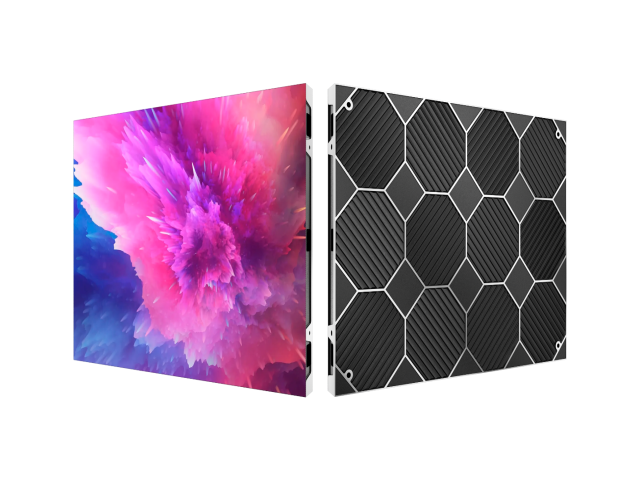
What Is the Structural Difference Between COB and SMD LED Displays?
LED Packaging Structure
COB mounts LED chips directly onto the substrate and protects them with a continuous encapsulation layer. This removes the individual plastic LED packages used in traditional SMD construction and creates a more integrated display surface.
SMD uses individual LED packages that are soldered onto the PCB. Each package contains the LED chips and connects to the circuit through soldered contacts, creating a modular package structure across the display surface.
PCB Integration
COB integrates the LED chips directly with the substrate, reducing the number of separate package components between the chips and the display surface. This construction can support compact pixel arrangements and fine pixel pitches.
SMD places packaged LEDs onto the PCB as individual components. The size and spacing of these packages influence how closely the LEDs can be arranged and affect the overall module design.
Surface Structure
COB creates a continuous encapsulated surface over the LED chips, giving the module a more uniform front structure with fewer exposed package components.
SMD leaves individual LED packages visible across the module surface, creating a more segmented package structure. The actual front structure varies depending on the package design and additional protection used.
How Does COB Compare With SMD in Display Performance?
Pixel Pitch for Close Viewing
When screens are installed at close viewing distances, pixel pitch becomes an important specification because smaller pitches provide higher pixel density. PTCLED’s fine pitch LED display range includes COB models with pixel pitches such as P0.78, P0.93, and P1.25.
SMD displays are also available in a wide range of pixel pitches. The suitable pitch depends on viewing distance, content requirements, display size, and installation environment.
Viewing Angle and Contrast
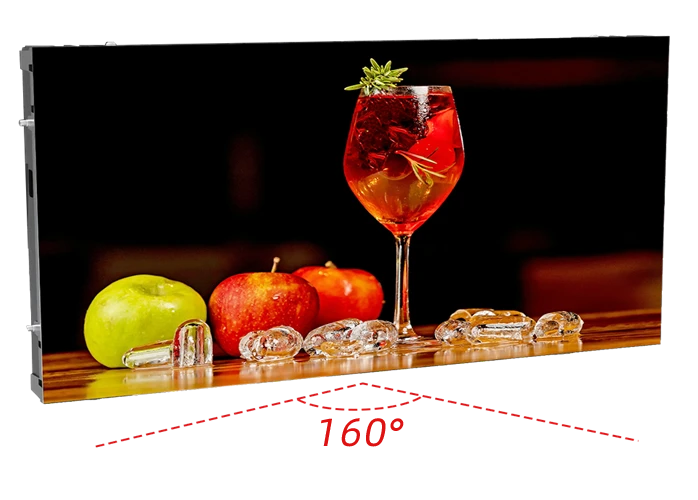
Selected PTCLED COB models offer viewing angles of up to 165 degrees and contrast ratios of up to 10000 to 1. These specifications can be useful in control rooms, meeting spaces, and other applications where viewers may watch the screen from different positions.
SMD performance depends on the LED package, pixel pitch, brightness, viewing angle, and display design. For standard indoor signage, SMD can provide suitable image quality when the display is selected according to the viewing environment.
Surface Protection
Surface protection becomes more important when an LED display is installed in a high traffic area or requires frequent cleaning and maintenance.
COB uses a continuous protective surface over the LED chips, providing additional protection against physical contact, dust, and surface moisture. Selected PTCLED COB models provide up to IP54 front surface protection.
SMD uses individually packaged LEDs mounted on the PCB surface. These packages can be more exposed to physical contact, although the actual protection level depends on the product design and additional protection measures.
Thermal Management
COB places the LED chips directly on the substrate, which can provide a direct thermal path from the chips into the board structure.
SMD places the LED chips inside individual packages, so thermal performance depends on the package design, PCB structure, operating current, cabinet construction, and cooling method.
For both technologies, buyers should evaluate the complete thermal design and operating conditions rather than the packaging method alone.
|
Performance Factor
|
PTCLED COB Display
|
Typical SMD Display
|
Buyer Consideration
|
|
Surface protection
|
Up to IP54 front surface on selected models
|
Depends on product design
|
Consider installation and maintenance conditions
|
|
Pixel pitch
|
Fine pitch options including P0.78, P0.93, P1.25, and P1.56
|
Depends on model
|
Match pixel pitch to viewing distance
|
|
Viewing angle
|
Up to 165 degrees on selected models
|
Depends on product design
|
Consider viewing positions
|
|
Contrast ratio
|
Up to 10000 to 1 on selected models
|
Depends on product design
|
Evaluate under actual ambient lighting
|
How Do COB and SMD LED Displays Differ in Maintenance?
Module Level Replacement
COB displays are generally serviced at the module level in the field. If an individual LED chip is damaged, technicians typically replace the affected module rather than attempting diode level repair on site.
The replacement module should match the original display specifications. The damaged COB module can then be returned to the manufacturer for professional repair.
SMD displays can also use module level replacement, depending on the cabinet and module design. Some products also allow component level servicing, so the maintenance method depends on the display architecture.
Front Access Maintenance
Front access allows technicians to remove display modules and selected components directly from the front when rear access is limited.
For displays using magnetic front access, technicians can replace a faulty module without requiring a rear service corridor. PTCLED’s COB Ultra uses a magnetic front access design.
SMD displays are also available with front access, although some conventional cabinets may require rear access for certain maintenance tasks.
Long Term Maintenance Cost Factors
Long term maintenance cost depends on the replacement method, spare parts availability, cabinet architecture, and service access.
COB commonly uses module replacement for field service, while diode level repair requires specialized equipment. SMD displays may offer more flexibility for component level servicing depending on the product design.
Buyers should compare the complete maintenance process and spare parts requirements rather than evaluating technology based only on purchase price.
When Should Buyers Choose COB or SMD?
Control Room Applications
COB can be suitable for control rooms and similar applications where fine pixel pitch, close viewing, high contrast, surface protection, or extended daily operation are important.
The decision should also consider viewing distance, brightness, maintenance access, installation space, and budget. PTCLED’s COB MAX offers brightness levels from 1500 to 3000 nits for environments requiring higher light output.
Standard Indoor Digital Signage
For general indoor digital signage where viewing distances are longer and direct physical contact is unlikely, SMD displays remain a practical choice.
SMD technology offers a wide range of pixel pitches and display configurations, making it suitable for standard commercial environments where extremely fine pixel pitch or additional surface protection is not required.
Project Requirements
The choice between COB and SMD should be based on the complete project requirements.
COB is more suitable when fine pixel pitch, close viewing, surface protection, or demanding indoor conditions are important. SMD can be practical when the display is viewed from a greater distance and the project prioritizes conventional configurations or cost control.
Buyers should compare viewing distance, pixel pitch, brightness, maintenance access, operating conditions, and total project cost before making a decision.
Frequently Asked Questions
Is COB More Expensive Than SMD LED Displays?
COB LED displays generally have a higher initial cost than many conventional SMD displays because their packaging structure and manufacturing process can increase production complexity.
The final project cost also depends on pixel pitch, cabinet size, brightness, processing equipment, installation structure, access design, maintenance requirements, and warranty terms.
Can Damaged COB LED Pixels Be Repaired on Site?
Damaged COB pixels are typically addressed through module replacement rather than individual diode repair on site. Technicians replace the affected module with a matching spare and return the damaged module to the manufacturer for professional servicing.
How Should Buyers Evaluate the Expected Service Life of a COB LED Display?
Buyers should evaluate rated service life together with operating brightness, drive current, thermal management, daily operating hours, and ambient conditions.
Actual service life depends on how the display is operated, installed, and maintained.
Conclusion
Choosing between COB and SMD depends on viewing distance, pixel pitch, operating conditions, surface protection, maintenance access, and project budget.
COB is well suited to fine pitch applications requiring close viewing or stronger surface protection, while SMD remains practical for standard indoor signage and conventional display requirements.
For project specific advice, contact PTCLED with your screen size, viewing distance, pixel pitch, brightness, and installation requirements to get a suitable configuration and quotation.




